Dog Lift Harness Manufacturer Wholesale Guide for Senior-Dog Brands
A dog lift harness helps owners of senior, arthritic or post-surgery dogs manage stairs, cars and daily movement - a high-empathy product with strong repeat-recommend value. This guide shows wholesale buyers what to confirm on support, handles and safety before sampling.
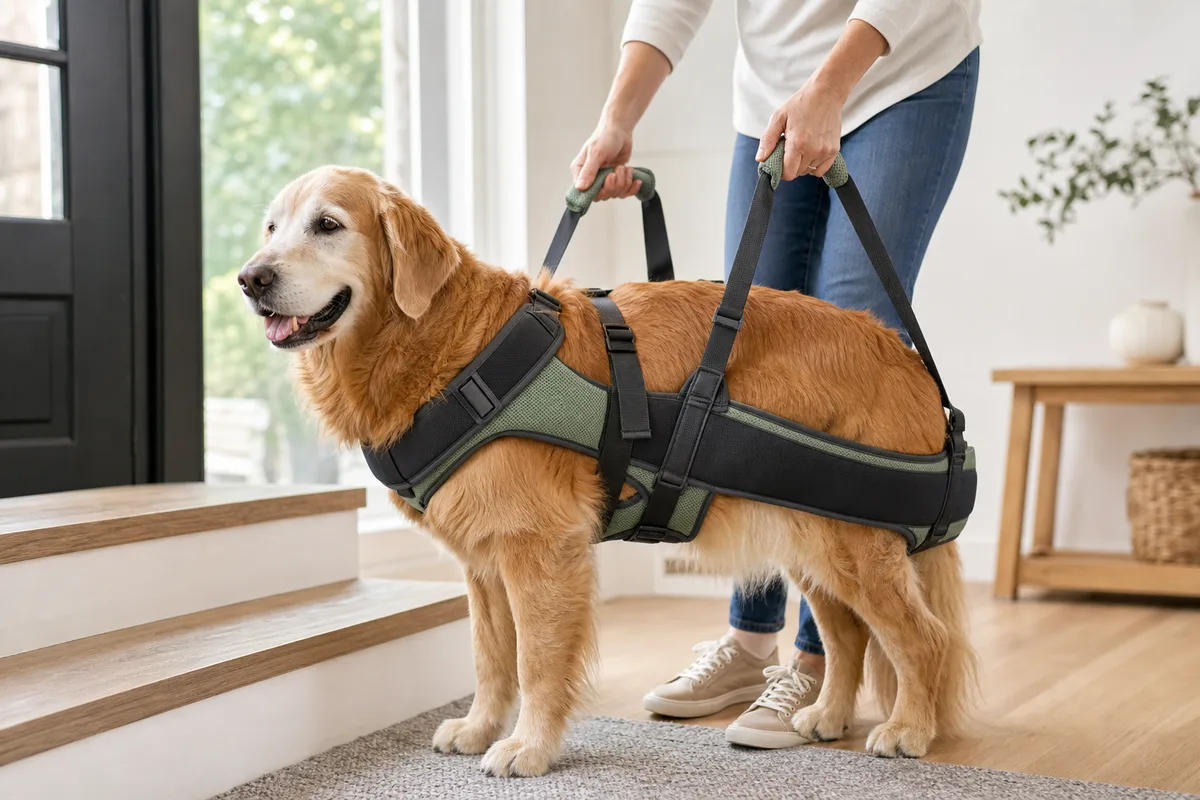
Senior pet care is one of the clearest growth niches heading into 2026. As the pet population ages and owners become more aware of mobility needs, product lines built around comfort and assisted movement are drawing steady demand. A dog lift harness - a padded support that helps an owner lift or steady a dog with weak hips, arthritis, or post-surgery limitations - is a high-empathy, repeat-recommend product that veterinary and rehab channels actively look for. This guide covers what a wholesale buyer should confirm before briefing a dog lift harness manufacturer.
Understand the two lift formats before you spec
Buyers should separate two related products. A full-body lift harness supports both front and rear with two handle zones, used for stairs, cars and long-term mobility loss. A rear-support sling targets the hips and back legs for dogs that still have strong front ends. The materials look similar, but the load path and handle placement are different, and mixing them up leads to poor fit and returns.
| Format | Best For | Key Engineering Point |
|---|---|---|
| Full-body lift harness | Whole-body weakness, post-op, stairs and cars | Balanced front/rear handles, wide chest and belly padding |
| Rear leg support sling | Hip/arthritis dogs with a strong front | Contoured hip cradle, non-slip inner lining |
| Convertible harness pack | Brands wanting one SKU to cover more cases | Removable panels, clear size grading |
Padding, handles and non-slip lining decide the reviews
The comfort of a lift harness is felt by both the dog and the owner. Wide, evenly distributed padding prevents pressure points on a frail animal, while reinforced bar-tacked handles at the correct height protect the owner's back. A grippy inner lining stops the harness sliding during a lift. Ask the factory to prove seam strength with a load test, and to document the tested working load so your listing can make a supportable claim.
Sourcing checklist for lift harnesses
- ✓Confirm handle bar-tack strength with a real load test, not a visual check
- ✓Check padding width across chest, belly and hip contact zones
- ✓Verify the size chart maps to real breed weight and girth ranges
- ✓Test the non-slip lining on a damp coat, not just a dry sample
Build a range, not a single harness
Senior-dog customers rarely buy just one item. A mobility collection can pair a full-body dog lift harness with a dedicated rear-leg support sling and a travel-friendly lift harness with carry pack for owners on the move. For product education, brands can point customers to general veterinary resources such as the VCA's senior dog care guide to build trust and reduce misuse.
OEM customization for a mobility line
Mobility products reward thoughtful, brand-specific detail because customers research them carefully. Buyers can specify padding thickness and placement, handle height and count, reflective trim for low-light walks, breathable mesh zones, and a size-graded range that maps to real breed weights. Your brand label, colorway and a printed sizing guide sewn into the harness all build trust at the point of use. Clear, honest labeling of the tested working load protects both the pet and your brand.
- ✓Custom padding, handle layout and reflective trim
- ✓Size-graded range with breed-weight sizing guide
- ✓Brand label, colorways and retail/FBA packaging
Who buys it, and where it sells
Lift harnesses sell through veterinary clinics, rehab practices, senior-pet specialty retailers and direct-to-consumer stores, where empathetic marketing and clear sizing win the sale. Because owners often buy on a vet's recommendation, professional-channel relationships and educational content convert especially well. This is a category where a brand that earns trust with quality and honest claims can hold margin and generate repeat referrals across a pet's later years.
Frequently asked questions
Can you build both full-body and rear-support harnesses?
Yes. Both use similar materials but differ in handle placement and load path, and we can size-grade each and add a travel carry pack to the range.
Do you support tested load claims?
We document a tested working load and reinforce handles with bar-tacking so your listing can state a supportable limit rather than a marketing guess.
Are your lift harnesses made with compliant, pet-safe materials?
We define material and construction requirements against the target market and approved sample. Relevant supplier declarations and project-specific third-party tests can be scoped before production, while in-line and pre-shipment AQL inspection records workmanship and agreed checks. Marketplace approval depends on the final SKU and its evidence; ISO or BSCI systems do not replace product-specific compliance review.
MOQ, samples and lead time
Eland Bag manufactures private-label mobility harnesses from a MOQ of 300 pieces per style and color. Standard samples take 3-7 days; production is typically 15-30 days for light customization or 20-45 days for heavy customization. Because these products carry real safety expectations, we recommend an extra sample round to confirm handle strength and fit before bulk production. Send your size range, target quantity and test requirements for a project-specific quotation.
Eland Bag also manufactures wholesale pet carriers and travel bags and OEM pet backpack carriers at the same MOQ, so one factory can supply a complete travel range.