5 Pet Bag Trends Selling in 2026
Pet bag demand is becoming more practical and more specific. Wholesale buyers are not simply adding another carrier to a catalog: they are building travel solutions that can earn repeatable reviews, fit a clear retail channel and support a believable private-label story. These are the five directions shaping briefs in 2026.
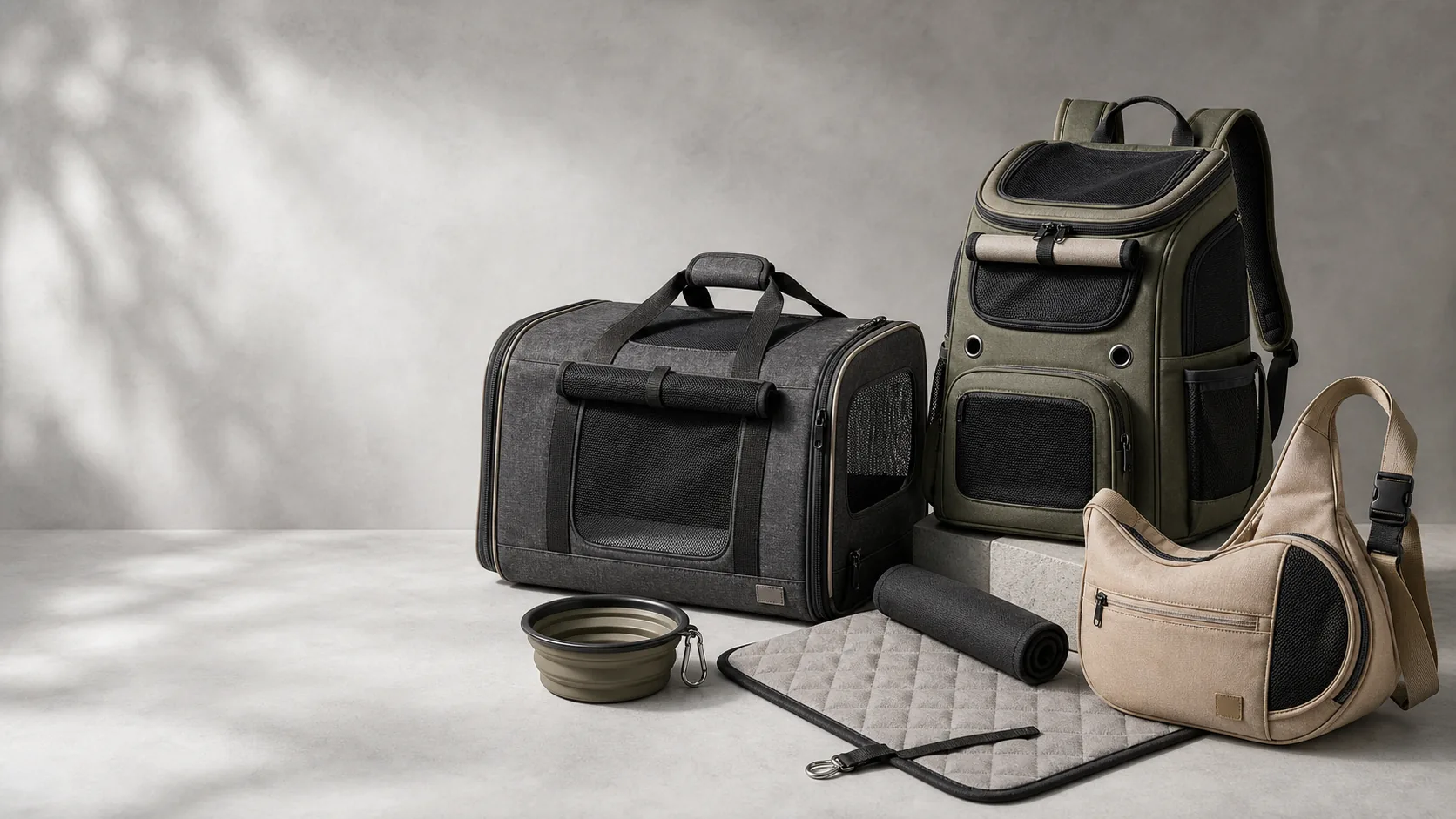
1. Travel-first products replace generic carriers
Consumers increasingly search for a solution to a particular trip: a cabin flight, a road journey, a commuter train or a vet visit. That gives B2B buyers a useful merchandising rule: select the journey first, then choose the bag format. A soft-sided carrier needs airflow, a stable base and practical storage; a car seat needs anchors, washable padding and clear fit guidance. Products with one obvious job are easier to explain online and easier for a retailer to position.
2. Easy-clean construction is becoming a purchase trigger
For pet products, everyday cleaning affects reviews as much as appearance. Buyers are asking for wipe-clean linings, removable cushions, water-resistant shells and seams that do not trap fur. The right specification is not necessarily the most expensive fabric. It is a balanced combination of shell weight, lining, mesh, zipper and base board that fits the intended retail price. Ask the factory to show a standard build and an upgraded build so the trade-off is visible before sampling.
3. Comfort is now a visible product feature
Straps, handles and ventilation used to be small technical details. In 2026 they should be clear selling points. Wider shoulder straps, breathable back panels, reinforced carry handles and multiple mesh panels communicate comfort to both the pet and the owner. For backpacks and larger carriers, load distribution matters especially: a good-looking product that sags or pulls at the seams will create avoidable returns.
4. Calm, retail-ready styling beats novelty
Novel colors can draw attention, but neutral base colors remain the safest first order for B2B brands. Differentiation can come from contrasting webbing, a logo patch, lining color, hangtags or packaging rather than an entirely new bag pattern. This keeps MOQ manageable while preserving enough brand character for photography and marketplace listings.
5. Systems and accessories raise average order value
Retailers are increasingly pairing carriers with foldable bowls, travel mats, replacement cushions, leash tethers and storage pouches. A coherent system gives a brand more than one SKU to launch, but it must be operationally sensible: shared colors, compatible packaging and carton planning should be resolved early. Start with one core carrier and one or two accessories, then add variants after the first sell-through cycle.
Turn the trend into an OEM brief
Do not send a supplier only a mood board. Include the target user, sales channel, size range, preferred materials, logo method, packaging requirement, first-order quantity and destination market. Compare formats in our pet product catalog, including OEM pet carriers and pet carrier backpacks. When you have a reference product and quantity, send us your brief for a practical recommendation.
What buyers should ask during sample review
Review the sample against the promise that will appear in the listing. Test whether the carrier stands as photographed, whether a small pet can enter and exit comfortably, whether mesh is secured at the seams and whether the handle feels stable under the intended load. Document the approved fabric, hardware and packaging with photos. A clear sample record prevents a successful trend concept from being weakened by unplanned production substitutions.
Launch with a proof-led content plan
Use product photos, short demonstrations and size guidance to prove the value of the design. Show the interior tether, the removable pad, ventilation panels and folded storage position rather than relying only on lifestyle shots. This helps a distributor sell the item on its own site and gives marketplace customers answers before they purchase. A focused content set also makes later color or accessory variants easier to introduce.
Plan the second order while approving the first
Ask the factory which materials have stable supply, which custom elements affect lead time and how a repeat order can be scheduled. The first order should generate real feedback on size, color and features; the second order should turn that feedback into a controlled assortment. This is more durable than constantly replacing the product with a new novelty design.
Eland Bag also manufactures wholesale pet carriers and travel bags and OEM pet backpack carriers at the same MOQ, so one factory can supply a complete travel range.