Dog Seat Belt Manufacturer Wholesale Guide
The car-safety gap is huge: most dogs still ride unrestrained. A dog seat belt tether is a low-cost, high-trust product buyers can lead with. This guide covers strength, hardware and sourcing terms before you brief a factory.
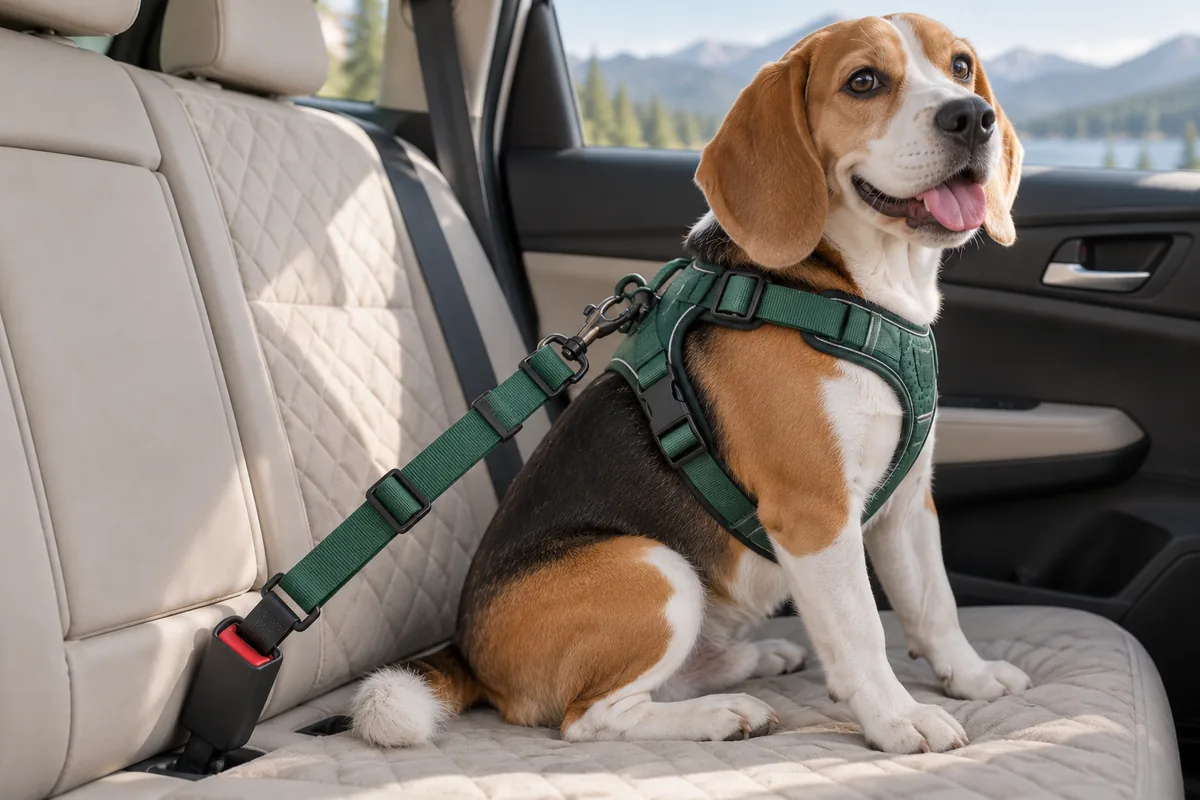
The demand story for dog seat belts is unusually clear. Roughly 87% of dog owners who travel do so by car, yet studies find that 84% drive with unrestrained dogs and only 16% use any restraint - and proper restraints can cut injury risk by about 80%. That gap between behavior and safety is exactly the market a well-made dog seat belt tether serves. As fall road trips ramp up, it is a low-cost, high-trust SKU that leads customers into harnesses and car covers. This guide covers what to confirm before briefing a dog seat belt manufacturer.
This is a strength product, not a strap
A dog seat belt is a safety tether that connects a harness to the car's seatbelt system. Because it is marketed on safety, the hardware and stitching are the product. Use a strong seatbelt buckle or latch-bar clip, a heavy-duty swivel snap, wide bar-tacked webbing and a controlled length that limits forward travel without letting the dog roam. Always position it as a companion to a harness, never a collar, in your copy.
| Component | Why It Matters | Spec to Confirm |
|---|---|---|
| Buckle / latch clip | Anchors to the car safely | Metal or reinforced buckle, pull strength |
| Swivel snap hook | Prevents tangling and stress | Rated snap, smooth swivel |
| Bar-tacked webbing | Carries crash load | Webbing width, stitch pattern, load test |
| Adjustable length | Limits forward travel | Short, controlled range with lock |
Materials and honest safety claims
Spec heavy-denier nylon webbing, zinc-alloy or reinforced hardware, and reinforced bar-tack stitching at every load point. Be careful and accurate with claims: market it as a restraint that limits movement and distraction, and pair it with a properly fitted harness rather than overstating crash protection. Third-party pull testing gives your listing credibility and protects the brand.
Buyer sample checklist
- ✓Pull-test the buckle and latch clip to the rated force
- ✓Load-test bar-tacked webbing at every stitch point
- ✓Confirm the swivel snap turns freely and locks securely
- ✓Check the adjustable length limits forward travel as intended
- ✓Verify hardware is corrosion-resistant and edges are smooth
Position it in a car-safety range
The seat belt is the entry point to a whole car-safety collection. Cross-link the product page to pet harnesses, a dog car seat range and a pet car seat. For customer-facing safety copy, brands can reference the Center for Pet Safety, which crash-tests pet restraints.
OEM customization that raises perceived value
A seat belt is a safety tether, so credible branding pairs clean design with tested hardware. Buyers can specify webbing color, hardware finish, adjustable length range, a printed label and a matching harness. Because trust closes the sale, third-party pull-test documentation plus tidy branding lets a brand command a higher price with confidence.
- ✓Custom webbing color, hardware finish and length range
- ✓Matching harness set and printed or woven label
- ✓Retail and FBA packaging with hangtag and barcode
Who buys it and when to ship
Dog seat belts sell to car-safety and travel pet brands, Amazon sellers and auto retailers, and as a low-cost entry product they pull customers into harnesses and car covers. Demand runs year-round with a fall road-trip lift, so a September sample is well timed for holiday travel. Cross-sell the belt into harnesses, car seats and cargo liners from the product page.
Sourcing timeline and quality control
Plan your calendar from the sample back: 3-7 days to build it, your review, 15-30 days for light customization or 20-45 days for heavy customization for bulk production, plus freight and receiving. For a safety tether, define the buckle, snap and bar-tack pull-test method as well as the length range before approval. In-line and pre-shipment AQL inspection records workmanship; formal hardware-strength evidence requires testing to agreed loads, sample counts and acceptance criteria.
Frequently asked questions
What is the MOQ for custom dog seat belts?
Eland Bag starts at 300 pieces per style.
How long do samples and bulk take?
Around 3-7 days for samples and 15-30 days for light customization or 20-45 days for heavy customization for bulk, plus freight.
Do you pull-test the hardware and stitching?
Pull testing can be arranged once the required load, fixture, sample count and pass criteria are agreed. AQL inspection and photo/video reporting cover the approved construction and workmanship, but they do not replace a product-specific strength report.
MOQ, samples and lead time
Eland Bag coordinates dog seat belts and matching harness sets from a MOQ of 300 pieces per style and color. Standard samples take 3-7 days; production is typically 15-30 days for light customization or 20-45 days for heavy customization. Send your hardware preference, length specification and test requirements for a project-specific quotation.
Eland Bag also manufactures wholesale pet carriers and travel bags and OEM pet backpack carriers at the same MOQ, so one factory can supply a complete travel range.