How to Cut Shipping Costs on Bulk Orders
For soft goods such as pet carriers, shipping cost is often controlled before the freight forwarder receives the booking. Product dimensions, carton design, color assortment and packaging choices determine how much air you are paying to transport. This guide helps buyers make those decisions earlier.
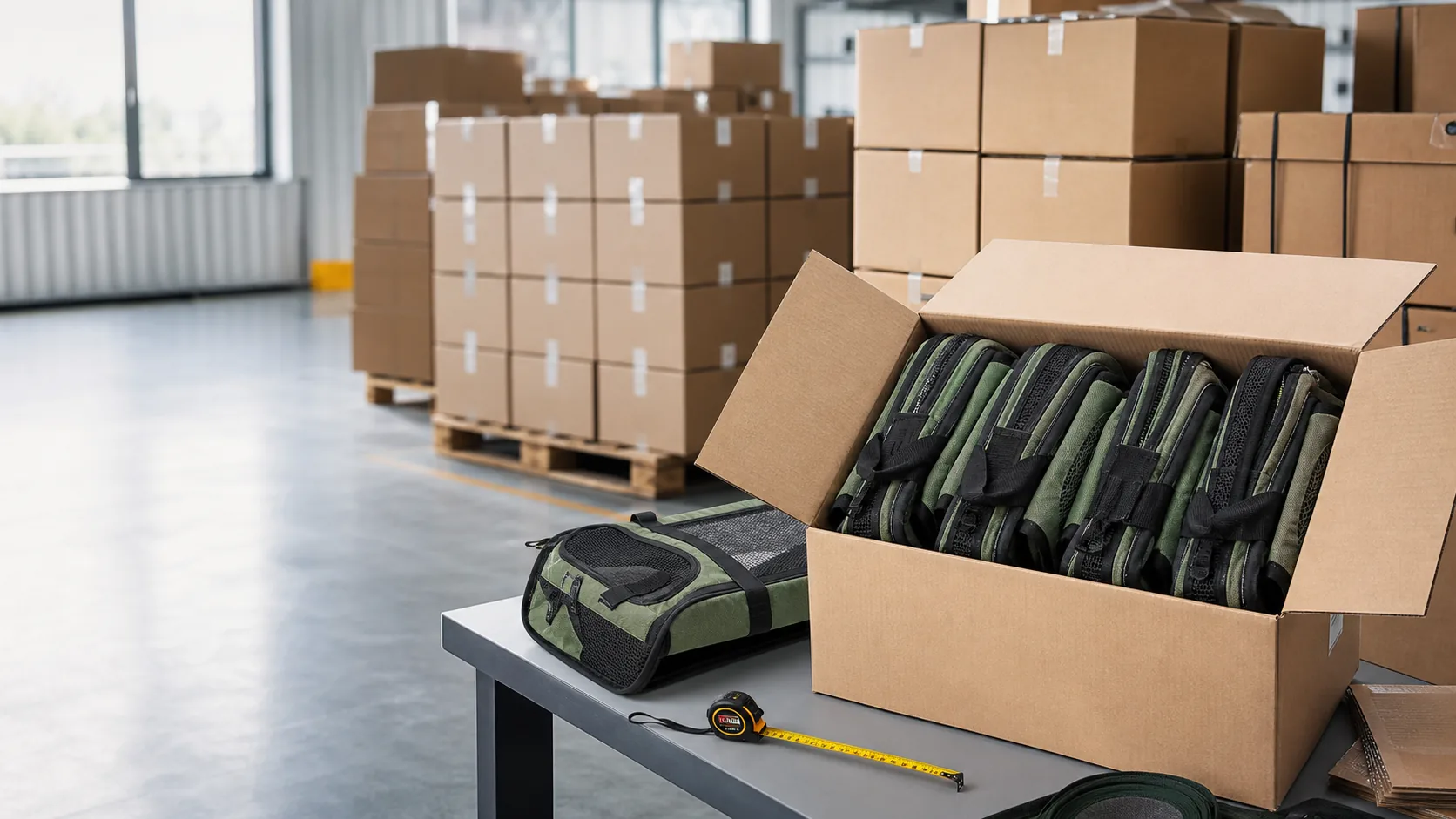
Start with packed dimensions, not product dimensions
A carrier can look compact on a product page but become expensive once its base board, inserts and retail box are included. Request a packing specification with carton length, width, height, pieces per carton, gross weight and net weight. These numbers let you estimate container utilization and compare air, sea and courier options fairly. A quote without packing data is only a partial quote.
Design the product to nest or fold where appropriate
Soft-sided carriers commonly offer the best cube savings when they can be folded or nested without damaging the frame, mesh or zipper. That decision belongs in development, not at the loading dock. A rigid carrier may justify its freight cost for premium retail, while a collapsible model may be stronger for a marketplace launch. Products designed to flatten travel far better in a container: a folding pet crate, a foldable pet playpen and collapsible travel bowls all ship in a fraction of their in-use volume. Ask the factory to demonstrate the packed configuration during the sample stage.
Keep the first assortment focused
Many small variations create weak carton efficiency. If the first order is divided across too many colors or sizes, cartons may contain mixed quantities that are harder to count, label and replenish. Begin with the best-selling color and one supporting option, then build a deeper assortment after sales data is available. This can also reduce MOQ pressure associated with custom fabric, labels and printed packaging. The custom order FAQ explains how the MOQ per style per color interacts with carton planning.
Choose packaging that supports the sales channel
Retail presentation is important, but it should solve a genuine shelf or delivery need. A simple polybag and insert card may work for distribution; a mailer-ready carton can suit direct-to-consumer orders; and a color box may be right for a giftable SKU. Compare unit cost, carton cube, damage risk and unboxing benefit together. A packaging sample avoids paying for a box that looks premium but ships poorly.
Compare freight on the same commercial basis
Ask every provider to quote the same incoterm, destination, cargo-ready date and packed measurement set. A low FOB price can be less useful if the buyer has no reliable freight option, while a DDP quote should make clear what taxes and delivery scope are included. For larger orders, compare total landed cost and cost per carton, not only freight per kilogram.
Get the right quote before production
Include your destination port or delivery country, expected quantity, preferred packaging and sales channel in the quote brief. Eland Bag can provide product and carton details for planning through our manufacturing and logistics support. Browse the OEM pet bag range or send your target order for a practical next step.
Separate unit price from landed cost
A lower ex-factory price does not always create the lower final cost. Heavier fabrics, oversized packaging and inefficient cartons can quickly offset a small unit-price saving. Build a simple landed-cost sheet that includes the product, packaging, inspection, freight, duties where applicable and local delivery. Use the same assumptions when comparing suppliers so the purchasing decision reflects the cost of receiving sellable inventory.
Use the sample stage to test carton efficiency
Request one packed sample and one master-carton sample when the order value justifies it. Confirm how the product is folded, how inserts are protected and whether the carton can tolerate normal stacking. This is the moment to adjust a base board, remove unnecessary void space or change the pack count. Small improvements repeated across hundreds of units can create meaningful freight savings.
Align production and booking dates
Freight premiums often appear when a buyer books too late or when goods are ready before labels and balance payments are complete. Work backward from the desired arrival date, include time for inspection and booking, and keep the supplier updated if your warehouse window changes. A realistic calendar protects both cost and delivery reliability.
Eland Bag also manufactures wholesale pet carriers and travel bags and OEM pet backpack carriers at the same MOQ, so one factory can supply a complete travel range.