How to Launch a Private Label Pet Bag on Amazon FBA
To launch a private label pet bag on Amazon FBA, lock the SKU, barcode strategy, packaging method and QC checklist before you approve the first sample. In 2026, buyers also need to account for Amazon's barcode-rule update, factory-side prep ownership and packaging that can enter FBA without relabeling or rework.
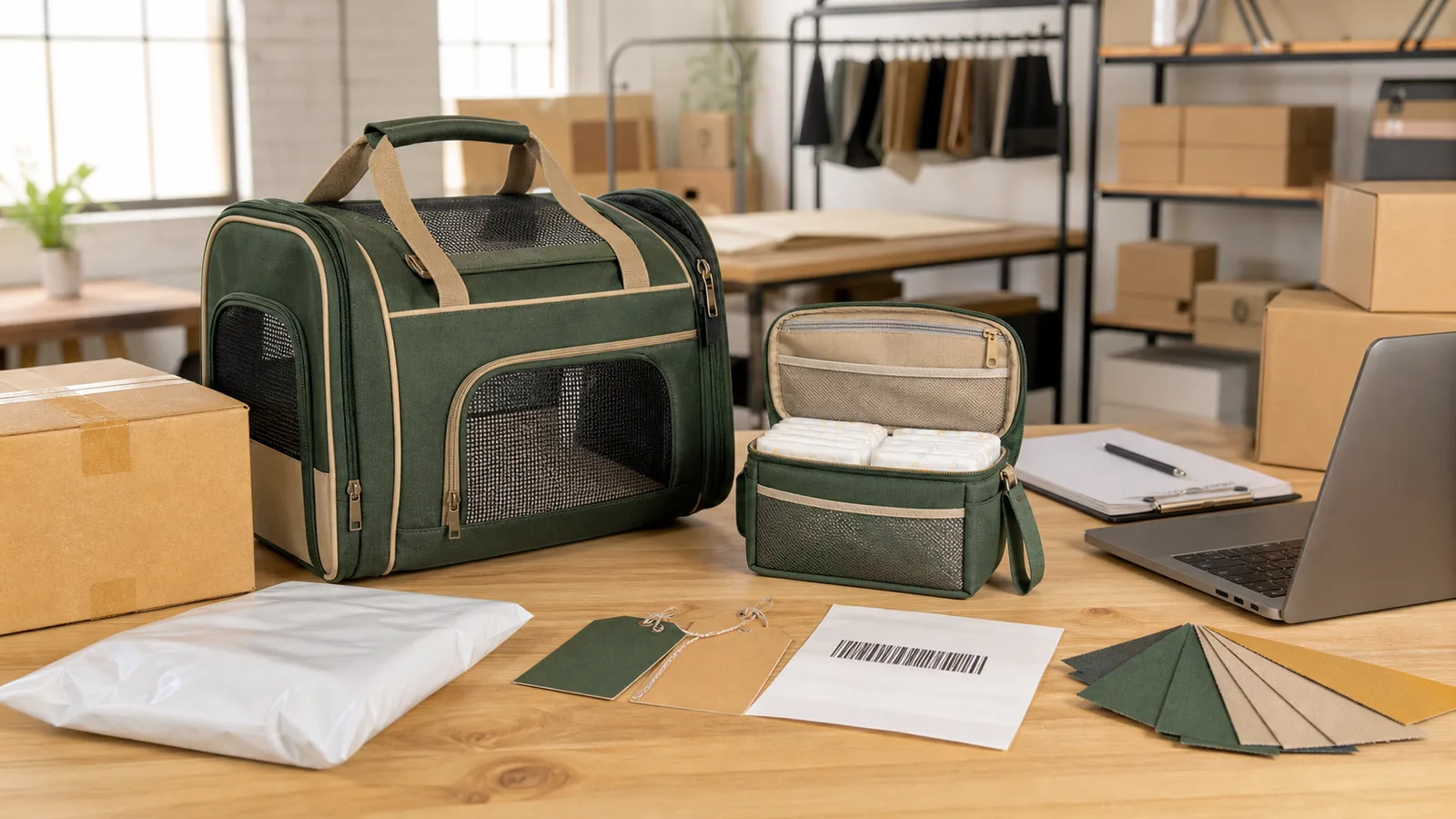
Private-label pet bags can work well on Amazon because the category supports gifting, repeat travel use and lightweight parcel economics. What usually breaks the first shipment is not the idea. It is the handoff between product development, packaging, listing setup and inbound prep. When those teams make decisions in the wrong order, the result is a bag that looks right in the sample room but arrives at the fulfillment center with the wrong barcode plan, weak retail packaging or inconsistent carton labeling. Before you plan the first shipment, review the ordering terms in our custom order FAQ.
This guide is written for wholesale buyers and brand operators building a new pet-bag SKU, not for casual resellers. If you still need the broad product-definition stage, start with this OEM pet carrier sourcing checklist. If your brief is already moving, the next step is to line up the factory file, the Amazon listing file and the packaging file so one approved sample governs all three.
What should you lock before the first sample?
The first sample should answer one launch question clearly: what exact customer trip is this bag solving on Amazon? A compact pet travel bag platform for car trips, a storage-led pet diaper bag program, and a commuter-focused pet carrier backpack range do not share the same packaging logic, review risk or barcode placement. That is why the sample brief should already include your marketplace objective, not just the bag dimensions.
| Decision to Lock | Why It Matters | What the Factory Needs |
|---|---|---|
| Core SKU concept | Drives structure, packaging volume and listing claims | Reference photos, target size, intended pet use and accessory set |
| Branding method | Affects MOQ, trim sourcing and final prep sequence | Logo file, label position, hangtag need and carton mark format |
| FBA packaging route | Determines barcode zone, polybag need and unit protection | Retail-pack concept, barcode preference and carton pack count |
Use the OEM / ODM custom manufacturing process to keep those approvals in order. The product team should not finalize a zipper, insert card or carry handle that conflicts with how the finished unit will be scanned, packed or received.
Which pet bag styles fit Amazon FBA best?
FBA usually rewards bags that ship cleanly, photograph clearly and generate fewer fit complaints. That does not automatically mean the smallest bag wins. It means the product should have a stable use case, a repeatable pack-out and a low-risk first review cycle. In practice, private-label launches often start with organized travel bags, structured carriers or compact accessories because those formats are easier to protect in transit than oversized or collapsible constructions.
For many buyers, the safest first launch is a format with obvious storage zones, washable lining and simple accessories. A soft pet travel organizer or carrier can show value quickly on the listing page because the customer understands the compartments, size and travel benefit at a glance. A more complex design can still work, but then the launch plan needs tighter sample approval and stronger photo-led instructions from the start.
Should you use a GS1 UPC or an Amazon barcode in 2026?
This is where many first-time private-label buyers lose time. Amazon Seller Central states that as of March 31, 2026, barcode requirements changed and brand owners can continue using manufacturer barcodes without stickers. At the same time, GS1 US explains that UPC barcodes identify products and are globally accepted for Amazon listings. The practical decision is not "Which barcode is better?" It is "Which barcode route matches this launch's brand status, inventory-control method and packaging timeline?"
For a first PO, the most resilient packaging layout is often a flat, quiet barcode zone that can support either a printed manufacturer barcode or an applied Amazon barcode later. That is a launch-planning inference, not an Amazon rule, but it reduces rework if your listing setup changes after the sample is approved.
| Barcode Route | Best Use Case | Buyer Watchout |
|---|---|---|
| GS1 UPC on package | Brand-led listings with stable retail packaging | Confirm eligibility and keep printing consistent across all variants |
| Amazon barcode / FNSKU | Launches that need Amazon-specific tracking on each unit | Reserve enough flat label area and avoid curved placement |
| Hybrid-ready layout | First orders where listing setup may still move | Do not let design elements consume the clean scan zone |
How should a pet bag be packaged for Amazon inbound?
Packaging should do three jobs at once: protect the unit, preserve the shelf-ready look for the customer and let Amazon receive the unit without ambiguity. Amazon's bagging requirements say that if a poly bag is used, the item identifier must remain scannable through the bag or appear on the outside. That matters for pet bags because many styles include soft handles, straps, loose insert cards and exposed accessories that buyers want to protect during inbound handling.
- ✓Barcode zone: keep one flat scan area free from seams, corners and glossy folds.
- ✓Accessory control: secure shoulder straps, bowls or inserts so the shipped unit matches the listing every time.
- ✓Transit protection: choose a unit pack that prevents mesh crushing, fabric stains and zipper abrasion.
- ✓Carton consistency: keep master-carton counts, dimensions and marks stable across the shipment plan.
Amazon does not care that a bag looked beautiful in the sample room if the inbound carton arrives with mixed unit configurations. The listing promise, the approved sample and the packed unit all need to describe the same product.
Why does sample approval matter more after January 1, 2026?
Amazon Seller Central notes that starting January 1, 2026, it no longer offers prep and item-labeling services for FBA shipments in the US store. The operational takeaway is straightforward: a private-label buyer now needs the factory, a third-party prep partner or the seller's own team to own more of the unit-level readiness before the shipment leaves origin.
That makes sample approval more than a design milestone. It becomes the last cheap point to confirm hangtag position, polybag opening direction, barcode placement, insert-card size and whether the unit can be packed repeatedly without wrinkling or hiding the scan zone. Buyers who treat the sample only as a styling review often discover their real packaging defects after bulk production has already started.
What QC checkpoints matter before the first FBA shipment?
Factory QC for an Amazon launch should combine normal bag inspection with e-commerce prep controls. A sewn bag can pass stitching inspection and still fail marketplace readiness if the label zone is distorted or the accessory count is inconsistent. That is why it helps to walk the factory through the actual inbound workflow, not just the sewing spec. If you want to see how the production side is organized, review the pet bag factory workflow before locking the first PO.
- ✓Scan test: verify that the finished unit barcode reads cleanly after final packing.
- ✓Function test: open and close zippers, buckles and organizer pockets on packed units, not just loose samples.
- ✓Appearance check: look for mesh collapse, pressure marks and dirty trim caused by packing friction.
- ✓Content check: confirm inserts, pads and straps match the listing and carton count.
- ✓Compliance file: keep the launch linked to the right material and warning review using this pet carrier compliance guide.
Private label pet bag first-PO checklist
A calm first launch usually beats an ambitious catalog explosion. Start with one clear hero SKU, keep the size or color matrix narrow and ask the factory to hold one approved pack-out standard. For custom development, a practical opening target is 300 pieces per style and color, with pre-production samples in 3-7 days and bulk production in 15-30 days for light customization or 20-45 days for heavy customization once the sample, packaging and barcode route are truly locked.
- Choose one product concept with a simple Amazon value proposition.
- Approve the retail pack, barcode zone and accessory count before bulk materials are booked.
- Keep the first PO narrow enough that reviews, replenishment and carton planning stay manageable.
- Align the factory sample file with the Amazon listing file so one version controls both.
- Use the quote request page only after the product, branding and inbound-prep assumptions are specific enough to price accurately.
That discipline is what turns a pet bag from a nice sample into a repeatable replenishment SKU. Amazon FBA can handle the fulfillment scale, but it does not correct a vague product brief. The launch still succeeds or fails on whether the buyer locked the right factory instructions early enough.
Frequently Asked Questions
These are the operational questions buyers usually ask before approving the first private-label pet bag shipment for FBA.
Is a GS1 UPC enough for a private label pet bag on Amazon FBA?
Sometimes, but not always. Amazon says that as of March 31, 2026, brand owners can continue using manufacturer barcodes without stickers. Buyers still need to confirm product eligibility, brand status and whether Amazon barcodes are a safer fit for the launch setup.
When should I print an FNSKU directly on the packaging?
Print an FNSKU directly on the retail package when you already know the final SKU setup and want to avoid extra sticker labor. If the listing setup may still change, reserve a flat label zone so the factory or prep partner can apply the barcode later.
Do pet travel bags need polybags for Amazon inbound?
It depends on the packaging format and exposure risk. When a poly bag is used, Amazon requires the item identifier to remain scannable, either through the bag or by placing the barcode on the outside.
What MOQ should I plan for a custom pet bag launch?
For custom development, plan around 300 pieces per style and color as a practical starting point. Keep the first launch narrow enough that packaging, barcode and review quality stay under control.
What should the factory inspect before the first FBA shipment leaves?
The factory should inspect barcode readability, zipper and strap function, seam quality, unit count, packaging condition, carton labels and whether the shipped unit matches the approved sample and listing configuration.
Build the Rest of Your Launch File
Use these related guides to connect private-label launch planning with sourcing, compliance and product definition.
OEM Pet Carrier Sourcing Checklist
Use the buyer-side checklist to tighten the product brief before you ask for the final quote.
Read Guide →REACH & Prop 65 for Pet Carrier OEM Buyers
Review the material and warning checkpoints that should move with the same approved sample file.
Read Guide →Eland Bag also manufactures wholesale pet carriers and travel bags and OEM pet backpack carriers at the same MOQ, so one factory can supply a complete travel range.