Airline Pet Carrier Size Guide for OEM Buyers
As of August 4, 2026, the safest OEM strategy is not to chase a vague “airline-approved” label but to build a soft-sided carrier around current under-seat rules, compression behavior, and market-specific documentation. Buyers who lock the size target, sample tests, and packaging language early reduce returns, false claims, and costly rework before launch.
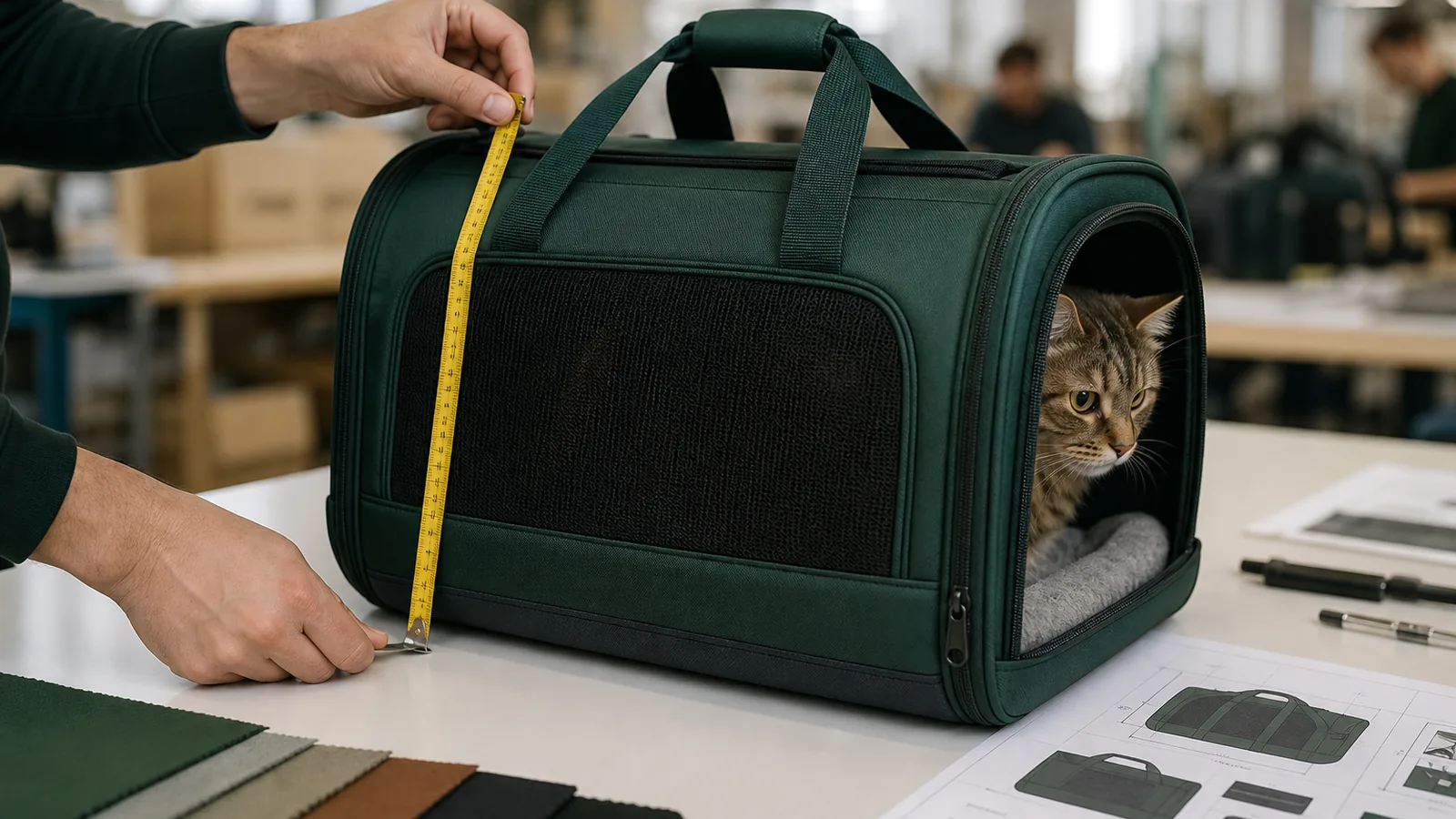
Many importers first meet the airline segment through a search term, then discover later that “airline approved” is not a universal certification. Airlines publish their own cabin rules, route exceptions still apply, and product acceptance depends on real under-seat fit rather than catalog language alone. This article picks up where our airline pet carrier factory brief stops and turns current airline limits into a more useful buying specification for a pet carrier manufacturing program.
What is the safest airline size target to sample in 2026?
A practical sample brief starts with published airline dimensions, then adds real-world compression and loaded-shape checks. For a private-label launch, the bag should be measured empty, lightly loaded, and pressed down to the expected under-seat profile before approval. IATA’s current traveler guidance also separates container suitability from the airline’s own acceptance procedure: the animal needs room to turn, stand, sit and lie naturally, while the operating airline decides the cabin and under-seat conditions.
| Official Source | Published In-Cabin Guidance | What OEM Buyers Should Convert Into Specs | Verified |
|---|---|---|---|
| American Airlines | Soft-sided carriers recommended at 18 x 11 x 11 in.; must fit under the seat without excessive collapse. | Control external length, height recovery, and mesh layout on 3 or more sides. | Aug. 4, 2026 |
| Delta Air Lines | Aircraft determines the actual limit; Delta recommends a soft-sided kennel up to 18 x 11 x 11 in. for most aircraft. | Test loaded height, leak-proof base, and domestic versus international ventilation layout. | Aug. 4, 2026 |
| JetBlue | Carrier cannot exceed 17 x 12.5 x 8.5 in.; soft-sided and hard-sided are both accepted if they fit under the seat. | Use this smaller footprint as a conservative benchmark for your first sample round. | Aug. 4, 2026 |
Source check completed August 4, 2026: IATA’s Traveler’s Pet Corner describes the animal-space and carrier-suitability baseline, while American Airlines, Delta Air Lines, and JetBlue publish operator-specific cabin limits. These references show why a buyer should not approve a carrier by one number alone. Two airlines may both accept soft-sided products, but the smaller limit still shapes the safest starting pattern if your launch will sell across multiple U.S. carriers.
Why buyers should design to the smallest realistic cabin footprint
From a sourcing perspective, the most expensive mistake is building a carrier that looks premium in studio photos but loses shape once a pad, tether, and animal weight are added. A bulk order can meet the nominal sample measurement and still fail in use because the top arch is too rigid, the base sags, or the zipper path steals usable space.
That is why many OEM buyers begin with a soft-sided airline pet carrier platform and keep the first commercial version conservative. If your first sample can behave well around the tighter JetBlue-style envelope and still present attractively at the more common 18 x 11 x 11 profile, your sales copy becomes safer and your return risk falls.
A related decision is whether to push the pattern toward “maximum cabin space” or “maximum acceptance rate.” New brands usually benefit from the second option. Once customer reviews confirm fit, you can later extend into a roomier premium variant or a large soft-sided carrier program aimed at specific channels rather than the broadest airline segment.
What must be frozen before sample approval?
The sample approval file should convert airline rules into measurable checkpoints. The factory should not receive a PO that says only “airline style” or “good for cabin travel.” It needs a revision-controlled sheet with dimension points, material codes, ventilation layout, and packaging wording.
Dimensions and compression behavior
Record external length, width, and height at named points, then repeat the measurement after a pad, base board, and light internal load are added. Buyers should also note how much the top panel can compress without distorting the zipper path or collapsing the animal’s breathing space. This turns published airline guidance into a usable sample test instead of a marketing promise.
Ventilation and leak protection
Airlines focus on under-seat fit, but the buyer has to think about travel time, cleanability, and customer complaints. Delta currently states that a soft-sided kennel should be leak-proof and have ventilation openings on 3 sides for domestic travel and 4 sides for international travel. That means the sample review should examine mesh placement, pad removal, waterproof layer construction, and whether the base seam stays clean after light liquid exposure.
Structure, hardware, and inspection
Handles, shoulder-strap anchors, zipper stops, safety tethers, and base insert pockets must all be part of the sample sign-off. The right moment to set those checkpoints is before the PO, using the same inspection logic described in our pet carrier quality control checklist. If the sample is signed but the QC team never receives the dimension tolerances, the order is already exposed.
How should product pages and packaging describe airline use?
For procurement teams, the wording on the hangtag or Amazon detail page is part of the product specification. A bag can be built correctly and still create returns if the copy sounds absolute. Buyers should prefer wording such as “designed for in-cabin travel on many major airlines” and then remind end users to verify the current rules for their aircraft, route, and destination.
This matters because size is only one layer of acceptance. American Airlines currently lists route restrictions for carry-on pets on some international itineraries, and destination documentation requirements may still apply. The USDA APHIS pet travel guidance is a useful planning source for destination-entry paperwork, while your product team still needs its own material records and test files. Our compliance documentation guide can help separate product compliance from pet-entry paperwork so the launch copy stays accurate.
What should the factory and service team confirm before bulk production?
Once the sample is approved, the next risk is process drift. A pilot sample may use the right board thickness, foam density, and zipper gauge, then later production substitutes something softer or lighter. The buyer should align the final build with the broader OEM/ODM services workflow and make sure the production team, merchandiser, and inspector all reference the same revision.
| Control Point | Buyer Question | Expected Evidence |
|---|---|---|
| Pre-production sample | Does the signed sample match the final BOM and carton plan? | Revision number, signed photos, and dated approval record |
| In-line check | Is the structure holding shape after first production units? | Measured first articles and issue log if corrections are needed |
| Final inspection | Do packed units still match the approved fit and wording? | Inspection report, photos, and carton-label verification |
Buyers who want more visibility into sewing, sampling, and final packing can review the factory and quality-control process before locking their first airline line. The goal is simple: the specification used to quote the job should still be the specification used to inspect the job.
Buyer checklist for a first airline carrier launch
- ✓Choose one conservative soft-sided size target before asking for prices from multiple factories.
- ✓Measure the sample empty, loaded, and lightly compressed under a mock under-seat test.
- ✓Freeze mesh layout, base construction, zipper path, and safety tether details before bulk cutting.
- ✓Review packaging and listing copy so “airline use” stays accurate and non-absolute.
- ✓Keep the first order focused: one or two colors and the MOQ that fits your initial market test.
- ✓Use pre-shipment inspection to recheck dimensions, structure, accessories, and carton marks against the approved sample.
If you already know your target channels, send the carrier size target, preferred materials, first-order quantity, and destination market through our OEM inquiry form. A precise brief produces faster, safer pricing than a generic request for an “airline approved” bag.
Frequently Asked Questions
These answers help buyers turn airline rules into a more defensible OEM brief.
What size target is safest for an OEM airline pet carrier sample?
A conservative OEM target is a soft-sided sample that stays close to the smallest practical in-cabin footprint among your target airlines when loaded and compressed. Measure the sample empty and under light loading, then confirm it still fits the airlines you plan to reference.
Can a factory print airline approved on packaging?
Only with caution. Airlines set their own rules, aircraft under-seat space varies, and route restrictions change. Safer packaging language explains that the carrier is designed for in-cabin use and that travelers must verify current airline and destination requirements before departure.
Should soft-sided pet carriers be measured empty or loaded?
Both conditions matter. The empty sample shows the nominal factory dimension, while the loaded and lightly compressed sample shows whether the structure still behaves correctly under the seat. OEM buyers should record both on the signed specification sheet.
What documents should buyers plan for international pet travel markets?
Separate airline fit claims from destination-entry paperwork. Product teams need material records and market-specific compliance files, while sellers and travelers still need to verify vaccination, health certificate, and import requirements through official authorities before travel.
What should be approved before placing a first bulk order?
Approve the final dimensions, compression behavior, mesh layout, leak-resistant base, zipper and handle construction, packaging copy, carton plan, and inspection checkpoints. The signed sample and the PO specification must match exactly.
Eland Bag also manufactures wholesale pet carriers and travel bags and OEM pet backpack carriers at the same MOQ, so one factory can supply a complete travel range.